
Einführung
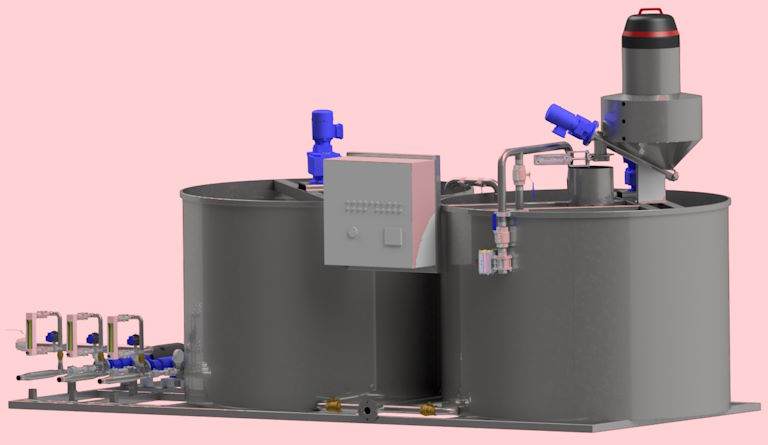
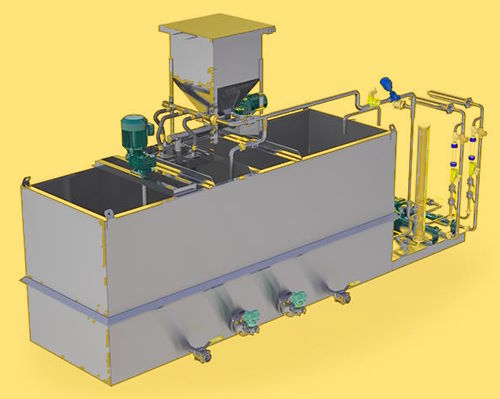
Der Elektropolymertank oder -behälter ist eine wichtige Komponente von Wasser- und Abwasseraufbereitungssystemen und dient der Lagerung und Herstellung von Elektropolymerlösungen. Aufgrund ihrer vielfältigen Ausführungen und hohen Effizienz werden diese Tanks in zahlreichen Branchen eingesetzt, unter anderem in der Chemie-, Lebensmittel-, Pharma- sowie Öl- und Gasindustrie. In diesem Artikel werden wir uns mit den Merkmalen, Anwendungen und der Bedeutung eines Polyelektrolytreservoirs oder einer Reservoireinheit befassen.

Eigenschaften eines Polyelektrolyttanks oder Tanksets
1. Baumaterial
Polyethylen (PE) und Polypropylen (PP)
Viele Polymerelektrolyttanks bestehen aus Polymermaterialien wie Polyethylen (PE) und Polypropylen (PP). Diese Materialien weisen eine hohe Korrosions- und Rostbeständigkeit auf und können auch gegen verschiedene Chemikalien beständig sein.
Edelstahl
Einige Tanks bestehen aus Edelstahl, der sehr korrosions- und rostbeständig ist. Diese Materialien werden besonders häufig in der Lebensmittel- und Pharmaindustrie verwendet, wo hygienische Bedingungen erforderlich sind.
2. Tankinhalt
Die Kapazität elektrolytischer Polymertanks variiert je nach den Anforderungen der Prozessabläufe. Das Tankvolumen kann von wenigen Litern bis zu mehreren tausend Litern variieren. Die Auswahl einer geeigneten Tankkapazität hängt vom Elektrolytverbrauch und den Prozessanforderungen ab.
3. Design und Form
Elektrolytpolymertanks werden in verschiedenen Formen und Ausführungen hergestellt. Einige dieser Tanks haben eine zylindrische , kubische oder konische Form. Eine geeignete Tankkonstruktion kann zur Verbesserung von Leistung und Effizienz beitragen.
4. Mischsysteme
Einige Elektropolymertanks verfügen über interne Mischsysteme, die dabei helfen, das Elektropolymer gleichmäßig mit Wasser zu vermischen. Diese Systeme können mechanisch oder hydraulisch funktionieren.
5. Abdeckungen und Anschlüsse
Elektrolytpolymertanks verfügen üblicherweise über verschiedene Deckel und Öffnungen, die den Zugang zum Tankinneren und das Einspritzen von Materialien erleichtern. Diese Abdeckungen und Steckdosen sind montierbar und verschließbar.
Anwendung von Polyelektrolyttanks oder -reservoirs
1. Chemische Industrie
In der chemischen Industrie werden Elektrolytpolymertanks zur Lagerung und Aufbereitung verschiedener chemischer Lösungen verwendet. Diese Tanks tragen dazu bei, die Effizienz und Sicherheit chemischer Prozesse zu verbessern.
2. Lebensmittel- und Getränkeindustrie
In the food industry, electrolyte polymer containers are used to store and prepare solutions used in the production of food and beverages. These tanks help to improve product quality and increase productivity.
3. Pharmaceutical industry
In the pharmaceutical industry, electrolyte polymer containers are used to store and prepare pharmaceutical and sensitive solutions. These tanks help to improve the quality and safety of pharmaceutical products.
4. Oil & Gas Industry
In the oil and gas industry, electrolyte polymer tanks are used to store and process various chemical solutions. These tanks help to improve the efficiency and safety of oil and gas production.
5. Water treatment and wastewater treatment
Electropolymer tanks are used in water and wastewater treatment systems for the storage and treatment of electropolymer solutions. These tanks help to improve water quality and reduce pollution.
The importance of using a polyelectrolyte tank or tank kit
1. Improve the quality of decisions
The use of polymer electrolyte containers helps to improve the quality of the prepared solutions. These containers allow homogeneous mixing of the electrolyte with water and the removal of suspended particles.
2. Reduced maintenance costs
Electrolytic polymer tanks require less maintenance due to their high corrosion and rust resistance. This feature helps reduce maintenance costs and improve cost-effectiveness .
3. Increasing the efficiency of cleaning processes.
The use of electrolytic polymer tanks helps to increase the efficiency of water and wastewater treatment processes. These tanks help to improve the quality of the injected solutions and reduce pollution.
4. Increased safety
Electrolytic polymer tanks help to improve the safety of process flows. These tanks help reduce the risk of chemical leakage and improve safety in the workplace.
5. Environmental friendliness
The materials used to make electrolyte polymer tanks are generally quite environmentally friendly. The use of these tanks helps to reduce pollution and protect the environment.

Graduation
Electropolymer tanks or containers are important pieces of equipment in water and wastewater treatment systems that help maintain and prepare electropolymer solutions. The diverse characteristics of these tanks, including materials, capacity, design and mixing systems, contribute to optimal performance and high efficiency. The use of electrolytic polymer tanks improves the quality of the solution, reduces maintenance costs, increases the efficiency of the cleaning process, and improves safety and environmental friendliness. By choosing and using these tanks correctly, you can improve your quality of life and protect the environment.