Viscosity is one of the most important rheological properties of polymer solutions and plays a crucial role in many fields, including manufacturing, pharmaceuticals, food processing, and scientific research. From the production of polymer fibers and films to the development of coatings, adhesives, and even injectable solutions, everything depends on the viscosity of a polymer solution. A precise understanding of viscosity helps professionals control production processes, improve product quality, and predict solution behavior under varying conditions. This article examines in detail the definition of viscosity, its influencing factors, key theories and models, and laboratory methods for measuring the viscosity of polymer solutions.
1. What is viscosity?
Viscosity is a measure of a liquid’s resistance to flow. The higher the viscosity of a solution, the more difficult it is for its different layers to flow. Put simply, viscosity is the reason why water is liquid and honey is sticky.
In polymer solutions, this concept is complicated by the numerous interactions between long polymer chains and the solvent, as well as between the polymers themselves, which strongly influence the flow behavior.
2. How does the viscosity of a polymer solution differ from the viscosity of a normal solution?
Simple solutions like salt water exhibit a linear viscosity that is independent of the applied stress. Polymer solutions, on the other hand, often show the properties of non-Newtonian fluids. In Newtonian fluids, the viscosity is constant, while in many polymer solutions it depends on the shear rate.
Typically, these solutions exhibit a decrease in viscosity with increasing shear rate (shear-induced viscosity decrease) . This phenomenon is caused by the alignment and stretching of the polymer chains along the flow direction.
3. Factors influencing the viscosity of polymer solutions
1. Molecular weight of the polymer
Molecular weight is one of the most important factors for viscosity. The higher the molecular weight, the longer the polymer chain and the greater the degree of cross-linking ; consequently, the viscosity is also higher.
In many systems, there is an empirical relationship between the marginal viscosity and the molar mass, which can be described by the Mark-Howink equation:
[η]=KMa[\eta] = KM^a
Where:
-
[η][η] Viscosity,
-
Molecular weight (MM
-
K and aa are constants that depend the type of polymer and solvent
2. Polymer concentration
Concentration is another factor that determines the viscous behavior. At low concentrations (corresponding to the range of dilute solutions), the polymer chains move independently of each other; however, with increasing concentration, i.e., in the range of semi-dilute and concentrated solutions, the polymer chains become entangled, and the flow resistance of the solution increases significantly.
3. Temperature
An increase in temperature typically leads to a decrease in viscosity, as heat weakens the bonds between the chains and thus reduces their resistance to movement. In many systems, this relationship follows Arrhenius’ law.
4. Type of solvent
Good solvents can open polymer chains, increasing their size and consequently the viscosity of the solution. Weak solvents, on the other hand, cause polymer chains to contract, decreasing the viscosity of the solution.
5. Molecular weight distribution
Polymers with a broader molecular weight distribution exhibit more complex viscosity behavior than polymers with a narrower molecular weight distribution. Even at low concentrations, the presence of long chains leads to increased viscosity.
6. Temperature and reaction types
In addition to the factors mentioned above, specific interactions such as hydrogen bonds, ionic bonds or physical interactions between the chains, as well as the presence of additives (e.g. salts or plasticizers), can also significantly alter the viscosity.
4. Viscosity type of the polymer solution
To investigate the behavior of polymer solutions, various viscosity types were defined:
1. Apparent viscosity
It is a quantity that is measured under certain shear rate conditions and is of extreme importance for non-Newtonian fluids.
2. Relative viscosity
The relationship between the viscosity of a polymer solution and the viscosity of a pure solvent.
3. Specific viscosity
An increase in the viscosity of the solvent as a result of the dissolution of the polymer.
4. Viscosity of the substance
Solvent viscosity is the most important viscosity parameter in polymer research. This value reflects the influence of the polymer on the solvent viscosity at zero concentration and is directly related to the size of the polymer molecule chains. Solvent viscosity is fundamental to many methods for determining molecular weight.
5. Rheological behavior of polymer solutions
1. Non-Newtonian fluid behavior and decrease in shear viscosity.
Most polymer solutions exhibit pseudoviscous behavior. At low shear rates, the polymer chains become entangled ; however, with increasing shear rate, they gradually lengthen and arrange themselves more closely, leading to a decrease in viscosity.
2. Determination of viscosity at high shear rates.
At extremely high speeds, the chains align completely and the viscosity reaches its maximum.
3. Flexibility of the solution
Besides viscosity, polymer solutions also exhibit elastic properties. This leads to phenomena such as the Weissenberg effect (the solution rises above the stirrer).
6. Important theories on the viscosity of polymer solutions.
1. Random file model
In solution, polymers typically form disordered helices. The size of these helices depends on the properties of the solvent and the molecular weight.
2. Mark Hornke Theory
This model describes the experimentally determined relationship between molecular weight and intrinsic viscosity.
3. Entanglement Theory
As the concentration increases , the chains become entangled and the viscosity rises significantly.
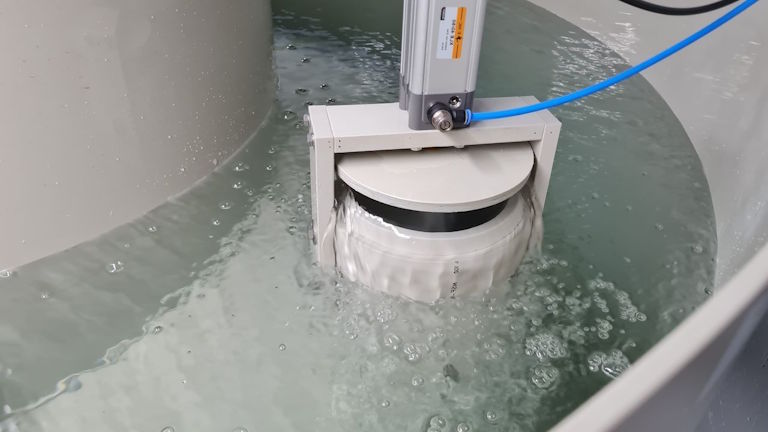
7. Method for determining the viscosity of polymer solutions.
1. Capillary viscometer (Ostwald viscometer, Oberold viscometer)
This is one of the most accurate methods for measuring the viscosity of dilute solutions. It involves measuring the time it takes for a solution to flow through a capillary tube and then calculating the viscosity . This method is frequently used to determine the intrinsic viscosity.
2. Rotational viscometer
For solutions of non-Newtonian viscous fluids, a rotational viscometer is the ideal choice, as these instruments allow the measurement of viscosity at different shear rates.
3. Brookfield viscosity scale
A widely used industrial instrument for determining the apparent viscosity of polymer solutions. Suitable for medium and high viscosity solutions.
4. Optical methods (light dispersion)
In some cases , light scattering can be used to determine the intrinsic viscosity or dynamic behavior of a chain.
8. Industrial applications of viscous polymer solutions
1. Textile industry and fiber production
Determining the viscosity of the polymer solution plays a crucial role in controlling the spinning process and fiber quality.
2. Food industry
Hydrophilic colloids such as xanthan gum, gum arabic, and sodium carboxymethylcellulose (CMC) are used to modify the texture and consistency of foods. The viscosity of their solutions determines their properties.
3. Production of adhesives and coatings
Viscosity determines the flow behavior and adhesion of an adhesive. The evenness of application of paints and varnishes also depends on viscosity.
4. Pharmaceutical industry
Polymer solutions can be used as drug carriers, stabilizers and thickeners in various injectable and oral dosage forms.
5. 3D printing
9. Viscosity control and improvement
In many applications, controlling the viscosity of a polymer solution is crucial. This can be achieved using the following methods :
-
Change the polymer concentration
-
Choose the appropriate solvent.
-
Add plasticizer.
-
Temperature control
-
Use of auxiliary polymers
-
Chemical modifications in the chain (e.g., increased ionization).
10. Conclusion
The viscosity of polymer solutions is a fundamental topic in polymer science and rheology. The flow properties and maximum viscosity of a solution are determined by various factors, including molecular weight, solvent type, temperature, and concentration. A deeper understanding of these factors helps engineers and researchers optimize production processes, improve product quality, and predict the behavior of solutions under different conditions .
Viscosity is more than just a physical property; it is a powerful tool for analyzing the molecular structure and dynamic behavior of polymer chains. Therefore, it plays a crucial role in many industries, such as the food, pharmaceutical, textile, paint and coatings industries, and 3D printing .