Polyethylenimine ( PEI ) is a synthetic polymer with a unique structure and excellent chemical and physical properties. Due to its high density of amino groups, including those found in cationic electrolyte polymers , it is considered highly active. PEI is used in numerous fields, including water treatment, gene transfer, nanomedicine, and the production of adhesives, coatings, and catalysts.
In this article, we will take a closer look at the chemical composition, properties, synthesis methods, types, and industrial and research applications of PEI.
Chemical composition of polyethyleneimine
Polyethylenimine, with the general formula (C₂H₅N)ₙ, is obtained from ethyleneimine or aziridine monomers. These monomers are highly reactive and readily open during cationic polymerization.
There are two main types of PEI:
-
Prince Edward Island Branch
-
A tree-like structure consisting of a mixture of primary, secondary and tertiary amines.
-
This type is commonly used in industrial plants.
-
High density of active functional groups
-
-
Linear PEI
-
Repetition of the secondary amine chain structure along the main polymer chain
-
Gentler biological behavior often used in biomedical applications.
-
Physical and chemical properties
| Special feature | Quantity/Description |
|---|---|
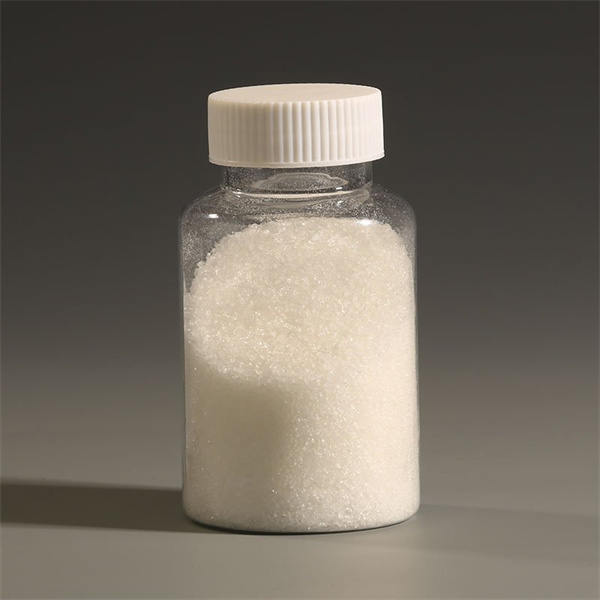
| Physical condition | viscous liquid (low molecular weight) or waxy solid (high molecular weight) |
| Color | from colorless to light yellow |
| solubility | Soluble in polar solvents such as water, ethanol, methanol, etc. |
| Surface charge | Cations, pKa about 8-10 |
| Molecular weight | From hundreds to millions of Daltons (adjustable) |
| Amine density | Very high (one amine per three atoms) |
 chemical reaction
Due to its high density of amino groups, PEI reacts with a wide variety of organic and inorganic compounds, including:
-
Absorption of heavy metals
-
Binds to DNA and RNA
-
Interaction with colloids and surfactants
-
Reactions with isocyanates, epoxides and aldehydes
How to make polyethyleneimine
PEI is typically prepared by ring-opening polymerization of aziridine monomers . This reaction is carried out in the presence of a strong acid (e.g., hydrochloric acid or BF₃), and the final product can be linear or branched.
In the laboratory, linear PEIs are typically synthesized using more specific stepwise methods and proprietary reactions.
Industrial and professional applications of PEI
1. Water and wastewater treatment
PEI is a strong cationic polyelectrolyte that can effectively remove suspended particles, colloidal particles, anionic dyes, and heavy metal ions. Its mechanisms of action include:
-
Particle charge equation
-
bridge block
-
Chemical adsorption of metal ions (such as Cu²⁺, Pb²⁺ and Ni²⁺)
PEI is also stable when treating water with high salt content or unbalanced pH.
2. Gene transfer and nanomedicine
One of the most important applications of linear polyethylene terephthalate (PEI) in biomedicine is the transfer of DNA into cells (gene transfer). PEI forms a complex with negatively charged DNA and penetrates the cell membrane.
Special feature:
-
High transmission efficiency
-
Protects DNA from enzymatic degradation.
-
Possibility of resizing nanoparticles
Shortage:
-
Potential cytotoxicity (especially in high molecular weight forms)
-
Careful optimization of dosage and structure is required.
3. Coatings and adhesives
PEI can be used as a binder in epoxy adhesives, corrosion protection, and antistatic coatings. Its high adhesion to metal and plastic surfaces makes it suitable for use in mechanical engineering.
4. Catalyst and reagent holder
The amino structure of PEI enables the binding of metal ions or catalytic compounds. In organic reactions, PEI can be used as both a homogeneous and heterogeneous catalyst.
5. Emulsion and nanoparticle stabilizer
In the cosmetics, pharmaceutical and food industries, PEI is used as an emulsifier or stabilizer of colloidal systems.
The advantages and disadvantages of Prince Edward Island
Special feature:
-
very high chemical reaction
-
Ability to form linear or branched structures
-
Excellent solubility in water
-
High efficiency in heavy metal removal
-
Can be used over a wide pH range.
Shortage:
-
Biological toxicity (especially high molecular weight)
-
High heat sensitivity ( unstable form)
-
Strong amine smell
-
Medical and nanogrades are expensive.
Factors influencing the choice of PEI type
When selecting the PEI type for a specific application, the following factors should be considered:
-
Molecular weight : PEI is more effective in adhesion and agglomeration; PEI with lower molecular weight is more useful for gene transfer.
-
Structure type : Branched PEI has higher reactivity, but linear PEI is more suitable for biological applications.
-
Purity : In biological and pharmaceutical applications, high purity and freedom from endotoxins are of utmost importance.
-
Thermal and chemical stability : For industrial applications, the temperature and chemical resistance of PEI is very important.
Global market and suppliers on Prince Edward Island
PEI is manufactured by companies such as BASF (brand name Lupasol®), Sigma-Aldrich , Polysciences , and Branched Polymers . It is available as a 50% aqueous solution or as a solid powder.
The increasing use of nanotechnology, advanced disinfection methods and biotechnology is driving global demand for PEI.
Finally
Polyethylenimine (PEI) is a cationic polymer with a unique structure that is widely used in the chemical, biological, medical, and environmental industries. Its unique properties, such as high amino group density, water solubility, and high reactivity, make it an ideal choice for complex industrial processes.
With the development of new technologies, such as nanotechnology, the use of PEI will continue to increase. However, to maximize the benefits of this polymer, special attention must be paid to safety, toxicity, and structural selection.